81% of US Small Firms Now Build Their Own AI. The Ones Ahead Scoped It First
Small businesses have stopped being customers for AI and started being builders of it. In research published on October 12, 67% of AI-engaged small firms now run at least one AI solution they built themselves, and only 13% stick to off-the-shelf tools. In the United States that build rate is 81% — the highest of the four markets surveyed.
The Q3 2026 Pax8 SMB AI Pulse Report polled 1,150 leaders at firms of 5 to 499 employees across the US, UK, Germany and Sweden. Read it as a progress report rather than a warning, because the firms furthest in are the ones who feel they are winning: in the US, 63% of heavy AI users say they are ahead of competitors, against 40% of those still experimenting.
What they are actually building
This is not prompt tinkering. Among the builders, 52% are wiring AI into other systems through automated workflows, 46% are building or testing agents that handle multi-step tasks on their own, and 39% have written custom integrations against a provider’s API.
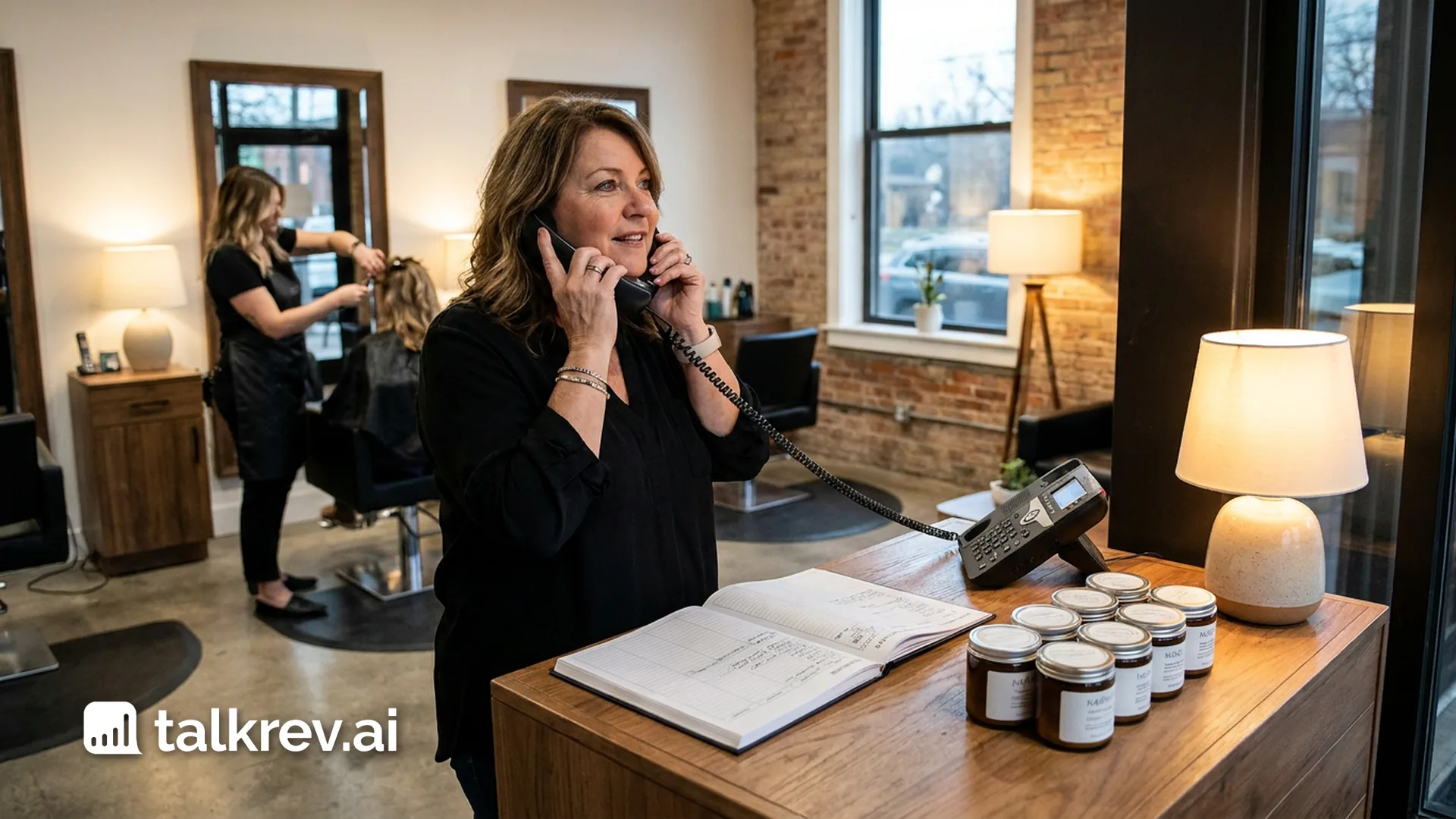
Translate that into a salon, a barbershop or a dental practice and it is recognisable: getting the phone covered at 7pm, connecting a booking calendar so a colour appointment gets the right stylist and the right 90 minutes instead of a generic half-hour, answering the same five questions about pricing, parking and aftercare for the fortieth time this week. The work is the same whether you are a two-chair studio or a three-location med spa — only the volume changes.
The two bills nobody budgeted for
Build-your-own carries a price, and the report puts numbers on both halves of it. The first is time. 55% of decision-makers spend three or more hours a week reviewing, editing or fact-checking AI output — 68% in the US — and 7% are at ten hours or more. At the same time, 69% say AI freed up at least some capacity. Both are true, and that is the problem: capacity won at the front desk is being handed straight back in oversight.
The second is money. 49% of firms that paid for AI received at least one bill higher than they expected, rising to 57% in the US, where usage-based pricing is also the most common model at 46%. And 35% discovered AI running in their business that nobody had approved. Only 36% of US builders put what they built through formal, documented review.
Where a salon or clinic should start
Pick one conversation that costs you money when nobody picks up — the call that comes in mid-treatment, the 9pm message asking about Saturday. Then write two lists before you switch anything on: what the agent may answer from your own service menu and prices, and what it must hand to a person. Anything clinical, any question about a reaction or a medication, any complaint. That second list is what only 36% of US builders ever write down, and it is the difference between coverage and exposure.
Ask what your busiest week costs, not your average one, if the pricing is usage-based. Then measure one number for 30 days: calls and messages that got no answer outside opening hours. If that number is not close to zero, the honest fix is not a better voicemail — it is something that answers every call, text and DM against your real availability, in one place and without adding a front-desk hire. Three hours a week of checking output is a bad trade. An empty chair at 10am on Saturday is a worse one.
Working in wellness & personal care? See how TalkRev works for Wellness & Personal Care.
The TalkRev blog
One short email per new post
No ads. Unsubscribe anytime.