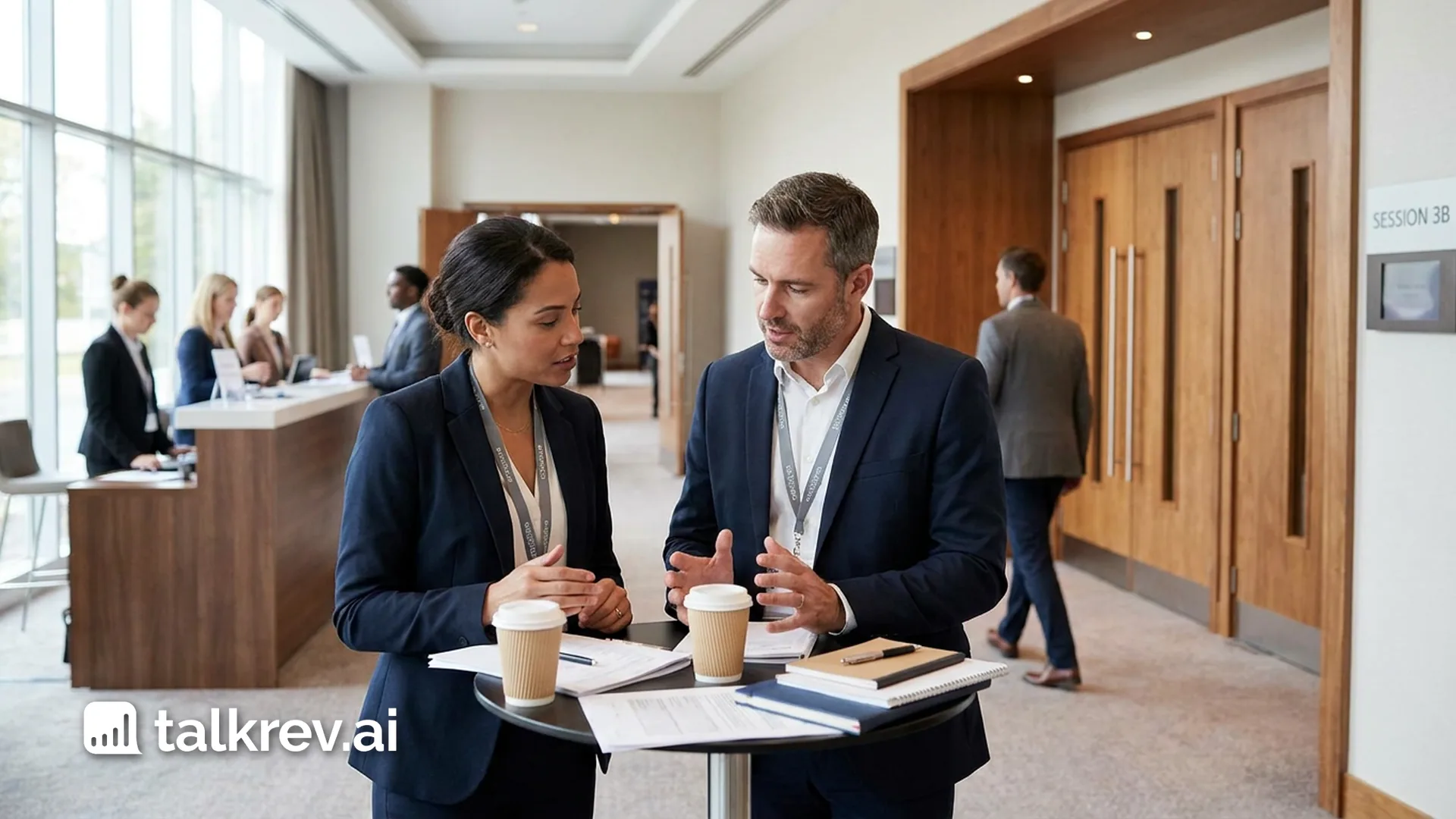
Attendees are sitting through fewer talks and booking more conversations. RainFocus put numbers on the shift in its 2026 Mid-Year State of Events Report, released September 2: average session attendance per person fell from 5.3 in spring 2025 to 4.2 in spring 2026, while participation in scheduled meetings climbed as much as threefold year over year.
The survey behind it is small — roughly 100 events and marketing professionals — but it matches what organizers have been saying out loud. “Attendees want conversations, not just presentations,” said RainFocus CEO JR Sherman.
The agenda stopped being the product
When a recording and a summary make it easy to catch a talk later, the reason to be in the room is the person sitting next to you. Organizers are giving floor space back to meetings, roundtables and one-to-ones — and running more, smaller events to do it. In the same report, 36% of surveyed companies said they planned to add ancillary events, roadshows and webinars in 2026, small-event attendance is up 6.4% year over year, and small events showed 69% more meeting participation.
That is a different operation, not just a different agenda. One flagship conference with forty sessions is a predictable support load. A flagship plus eight roadshows, each with a meeting schedule that changes hourly, is not — and the events team rarely grows to match.
The questions multiplied along with the meetings
A session is a broadcast. A meeting is coordination, and coordination generates inbound: where is room 4, my 2pm moved, can I swap slots, does my badge get me into the sponsor lounge, I’m running late, who am I actually meeting. Multiply that by three times the meetings and spread it across more events per year, and the volume lands exactly where it always did — in the 48 hours around each event, at all hours, on whichever channel the attendee happens to prefer.
Most of it is repetitive: schedule, room, parking, badge, refund policy, exhibitor setup times. It is also time-sensitive in a way that a post-event apology cannot fix. If you run conferences or trade shows, the day-of question load is the part of the job that scales worst — the two people who know the answers are on the floor, not at a desk.
What to fix before your next event
Start with evidence. Pull the phone log, inbox and chat transcript from your last event’s 72-hour window and count three things: how many inquiries arrived, how many came outside working hours, and how many were the same ten questions. Most teams have never counted, and the number is usually higher than the headcount they staffed against.
Then split the list. Anything that is a fact from your own materials — agenda, venue, ticketing, badge rules, booth numbers — is answerable without a human, in every language your attendees speak, in parallel, at 11pm the night before doors open. Anything commercial or unhappy — a sponsor negotiating a package, a registrant with a payment problem — should reach a named person fast, with the context already captured.
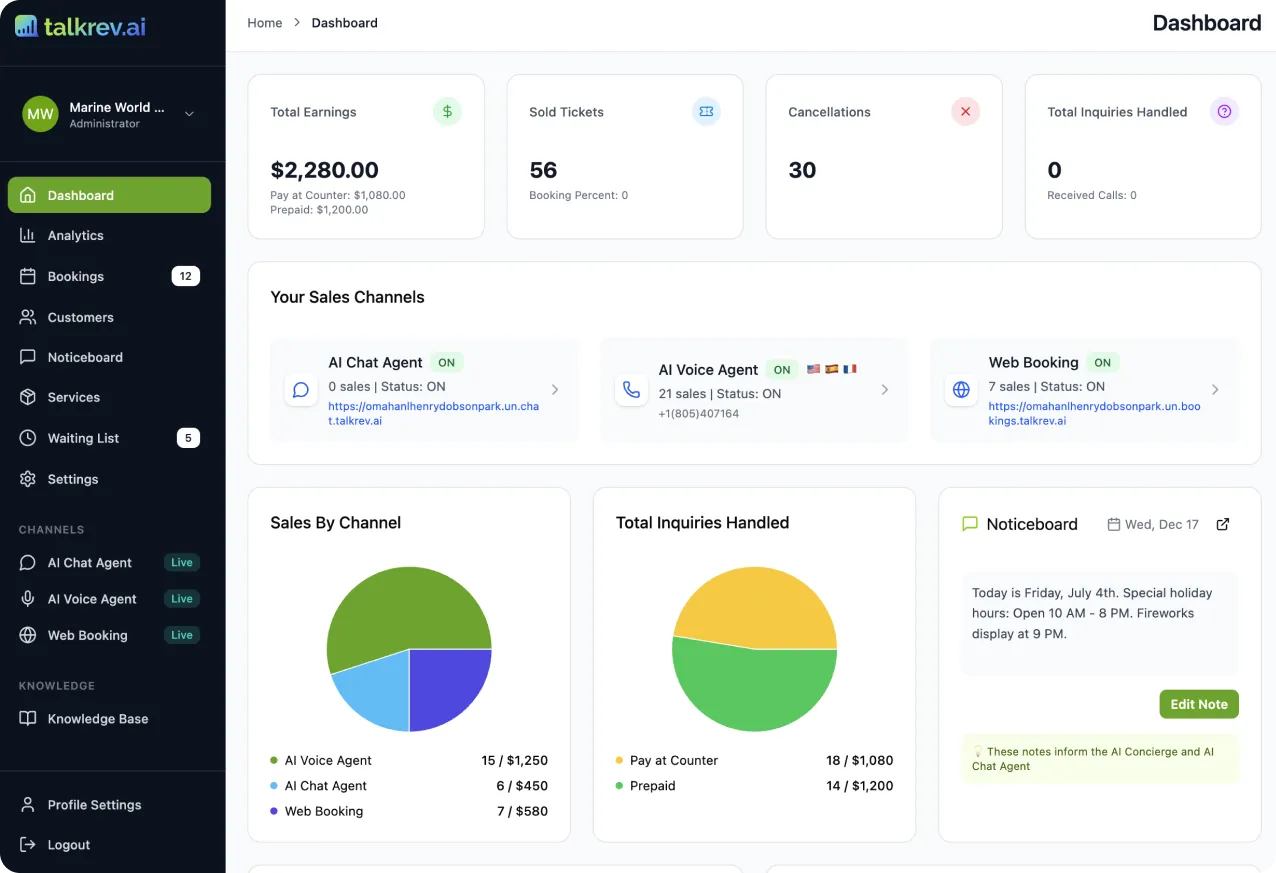
The practical move is to have something answer on the web, the phone line and messaging at once, with your event’s own information behind it, so your two experienced staff spend the day on the sponsor in the hallway rather than on the fortieth parking question. The cost of skipping it is quiet: a sponsor inquiry that sat unread over a weekend, a registration abandoned mid-checkout, an attendee who missed the meeting they came for.
Working in events & conferences? See how TalkRev works for Events & Conferences.
The TalkRev blog
One short email per new post
No ads. Unsubscribe anytime.