Consumers started handing errands to personal AI agents this autumn — Meta’s Muse, OpenAI’s Dots, Instinct — and the agents keep walking into locked doors. Amazon began blocking Muse on September 21. Delta, United, Yelp, eBay, Zillow, Pizza Hut and Adidas all restrict agent traffic in one way or another. Walmart’s blocks turned out to be an accident: its human-verification buttons simply do not work when a machine clicks them.
The gap that opens here is the interesting part. The biggest sites on the consumer web are busy deciding whether to admit the customer’s agent. A venue that is simply easy to reach does not have to decide anything.
Two different ways to lock an agent out
One is policy. Yelp wants agents to license its data through an official programme. eBay restricts unauthorised agents and scraping. Airlines point at automation clauses in their terms. These are choices, and the companies making them have data or inventory they are protecting.
The other is plumbing, and it catches everyone. A CAPTCHA, a “click to confirm you’re human” box, a bot-mitigation rule you never configured — none of that knows the difference between a scraper and a customer who asked an assistant to buy two tickets. Cloudflare has now formalised the distinction: its July changelog defines an Agent as “automated activity acting in real time on a person’s behalf” and, from September 15, new domains get defaults that block Agent and Training crawlers on pages carrying ads while leaving Search traffic alone.
The counter-move is already running. Meta, Walmart, Stripe, Sierra, Genesys, Rocket, NiCE and Decagon are writing an open standard for agent-to-business communication so a legitimate personal agent can prove it is one. Meta’s framing of the stakes is the clearest line in the story: “Turning away a personal agent means turning away the customer behind it.”
Most of what an agent wants from a venue is not a transaction
A family planning a Saturday does not start at checkout. The agent asks what your front desk is asked forty times a day: are you open on the bank holiday, how tall does a child have to be for the main ride, is parking included, does the 3pm show need a separate ticket, which entrance is step-free, what is the rate for a group of twenty.
None of that is inventory worth defending. All of it decides whether the ticket gets bought at all — and that is as true for a museum or a mid-size park as for a theme park chain. If the answer is buried in a PDF, sitting inside an image of your opening hours, or only available by phone between nine and five, the agent moves to the venue down the road that answers.
What to check before the next school holiday
Three things, in order.
Open your own ticketing flow in a private browser window and count the verification steps between “two adults, Saturday” and payment. Every one of them is a place an agent stops — and so does a parent on a phone in a car park.
Then check that hours, prices, height limits, accessibility and group rules exist as plain text on your own pages. Text is what gets read, quoted and acted on.
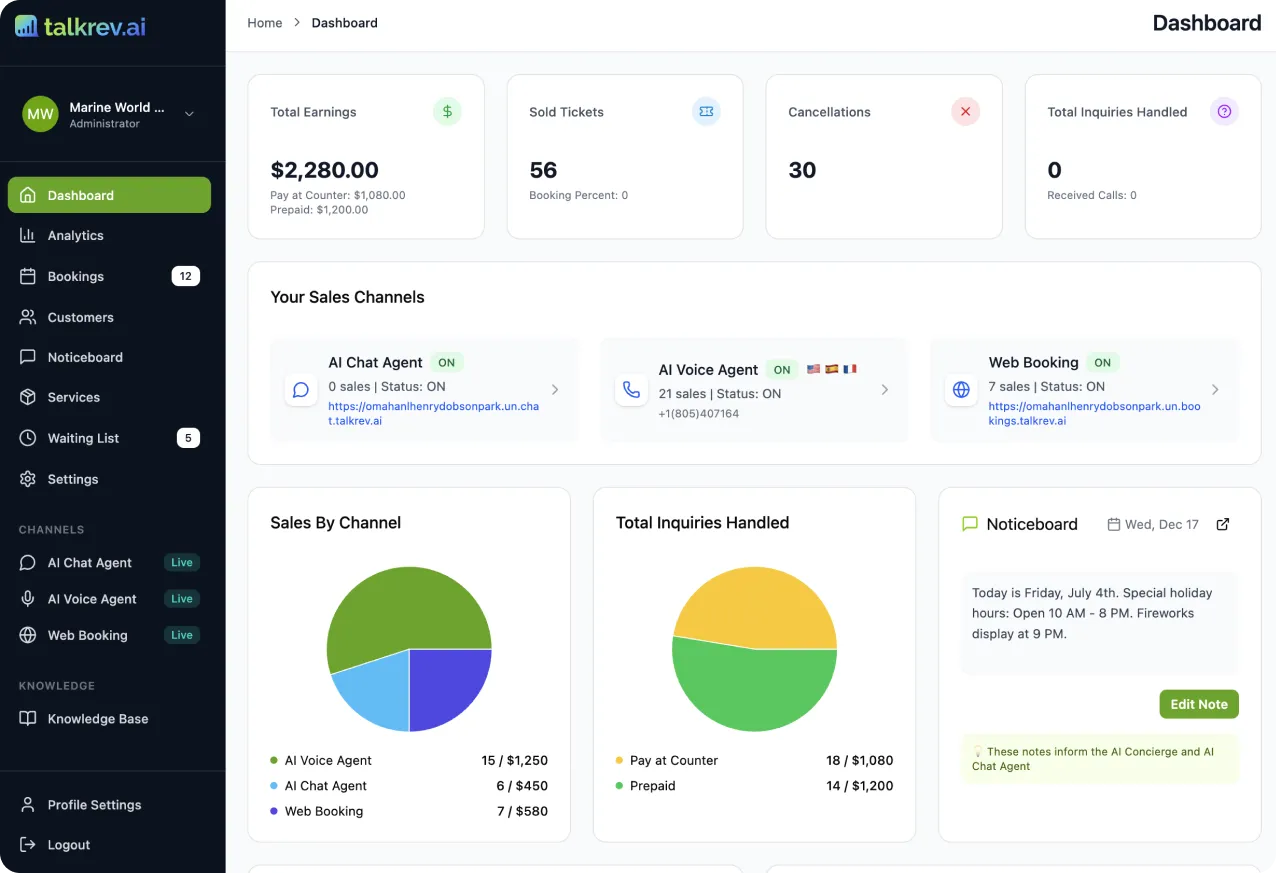
Last, decide who answers when the agent gives up, because it hands the visitor straight back to your phone line and your inbox — usually at the weekend, usually after hours. Having something that answers every call and message in the visitor’s own language, and passes refunds and complaints to a person, closes that gap without adding front-desk staff. The ticket you lose to a blocked agent is invisible. The one you lose to an unanswered phone always was.
Working in attractions & entertainment? See how TalkRev works for Attractions & Entertainment.
The TalkRev blog
One short email per new post
No ads. Unsubscribe anytime.