Callers Give You Three Tries. Now Your Phone Company Sells the AI That Picks Up
On October 2, BT Business launched a portfolio it calls AI from BT, and the headline product is an AI Receptionist that answers your phone around the clock. It handles routine enquiries, books appointments against Outlook or Google Calendar, transcribes what was said, and comes with selectable voices and accents. The part that matters most is the plumbing: it runs across any UK fixed or mobile network, so you keep your existing number and phone system and set it up from a self-service portal.
BT built the pitch on its own research. Censuswide polled 1,500 SME decision-makers and 2,000 UK adults in late September. Two numbers stand out: 67% of small businesses miss at least one valuable call on an average day, which BT scales to roughly £3.7 billion of lost revenue a year — and 75% of would-be customers give a business three call attempts before they give up and go elsewhere.
Why it matters that the network is selling this
Until now, putting an agent on your phone line was a software decision: pick a vendor, port or forward a number, wire it to your calendar. BT has turned it into a line feature you can switch on the way you once added voicemail. The company that owns the wire is now selling the thing that answers it.
That changes the competitive clock rather than the technology. BT is aiming this at trades, estate agents, healthcare and clinics, legal and financial services, retailers and hospitality — which is to say the salon two streets over, the firm competing for the same injury enquiry, the restaurant taking bookings during service. Whatever your sector, it is worth checking whether this applies to a business like yours: if answering every call becomes a few clicks in a portal, “we were busy” stops being an explanation anyone accepts.
Three attempts is the number to plan around
The 75% figure is the one to pin above the desk, because it reframes the problem. A missed call is not a deferred call. On BT’s numbers you get three rings of patience across the whole relationship, and voicemail does not count as answering — a caller who hears a recorded message has already spent one of their attempts.
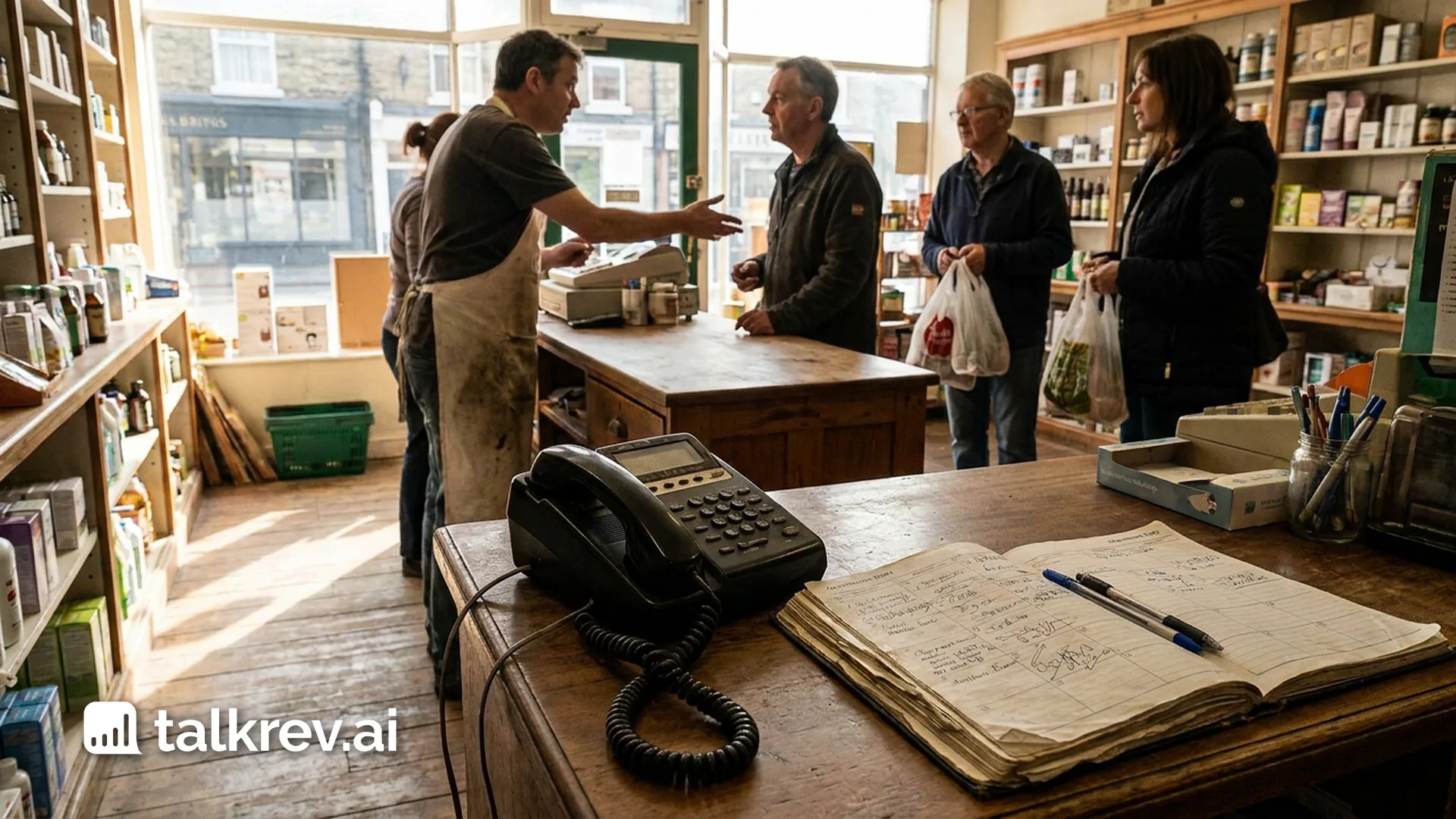
Those misses are not spread evenly. They cluster at the busiest hour, when everyone is on the floor, and after closing, when nobody is there at all. Both are moments when the caller is ready to book.
What to check before the next busy week
Pull your call records for the last 30 days and count two things: calls that rang out, and calls that arrived outside opening hours. Multiply the total by your average booking or matter value. That figure is what doing nothing costs you, and it is almost always larger than owners expect.
Then write down the five questions you answer most — hours, price, parking, availability, do you handle this kind of case — and decide what an agent should say to each, plus the cases it must hand to a person immediately.
One caveat on BT’s product: it answers the phone. Your customers also arrive by web chat, WhatsApp and Instagram DM, and a phone-only answer leaves those unread. Before you buy anything, look at how one agent can cover calls and messages together rather than solving a third of the problem well.
The TalkRev blog
One short email per new post
No ads. Unsubscribe anytime.