AB 1609, the Right to Human Customer Service Act, was enrolled and presented to California’s governor on 14 September. If it is signed, then from 1 January 2027 any company with more than $500 million in gross annual revenue nationally has to let a customer talking to its chatbot ask for a person — and actually get one within 15 minutes, or a specific appointment within one business day.
It is the first US rule that puts a stopwatch on the handoff. And read closely, it is not a rule against automation at all. It is a service spec for it.
What the bill actually asks for
Three obligations, none of which says stop using AI. Disclose clearly that the chatbot is artificial where a customer might reasonably think otherwise. Give them a plain way to ask for a human, which the bill text defines as “commonly understood commands, prompts, menu selections, or verbal requests.” And on the phone, no single hold longer than 15 minutes and no more than an hour of hold time in total. Civil penalties run to $5,000 for a first violation and $10,000 for each one after.
Note the direction of travel. As introduced in January the guarantee was five minutes; it left the legislature at 15. Legislators relaxed the clock, not the principle. The carve-outs are narrow too: Quarles’ walk-through of the bill notes hospitals get a broad exemption for care-related chatbots, while pharmacies, payers and PBMs stay covered.
The threshold is $500M. The expectation is not
Almost nobody running a store, a clinic or a restaurant clears half a billion dollars, so the statute will not apply to them. Their customers, though, are the same people. Once a shopper learns that asking for a person works at the national chain, they bring that expectation to the shop with three staff and one handset.
That is where it breaks, and usually in the opposite direction. The large retailer’s problem is an AI that will not let go. A small retailer’s problem is that nothing picks up at all: the call at 6pm on Saturday while the floor is busy, the Instagram DM about a return that sits until Monday, the same five questions — order status, size availability, exchange window, holiday hours, parking — asked every single day by different people.
A shop with an agent on the phone and the inbox does not have a 15-minute problem. It answers in seconds and routes the one caller who needs a human to the owner’s mobile. The standard that will cost a chain a compliance programme is trivially met by a small operator who simply stops letting messages queue.
Where to start before January
Measure the gap first. Pull last week’s call log and count what went unanswered, then check how long your oldest unread message sat. If either is over 15 minutes, you already know what the rule would say about you.
Then write down your escalation list before you automate anything: which requests must reach a person — refunds over a set amount, complaints, damaged orders, anything legal — and exactly where they land. An agent without that list is the chatbot loop the bill is aimed at.
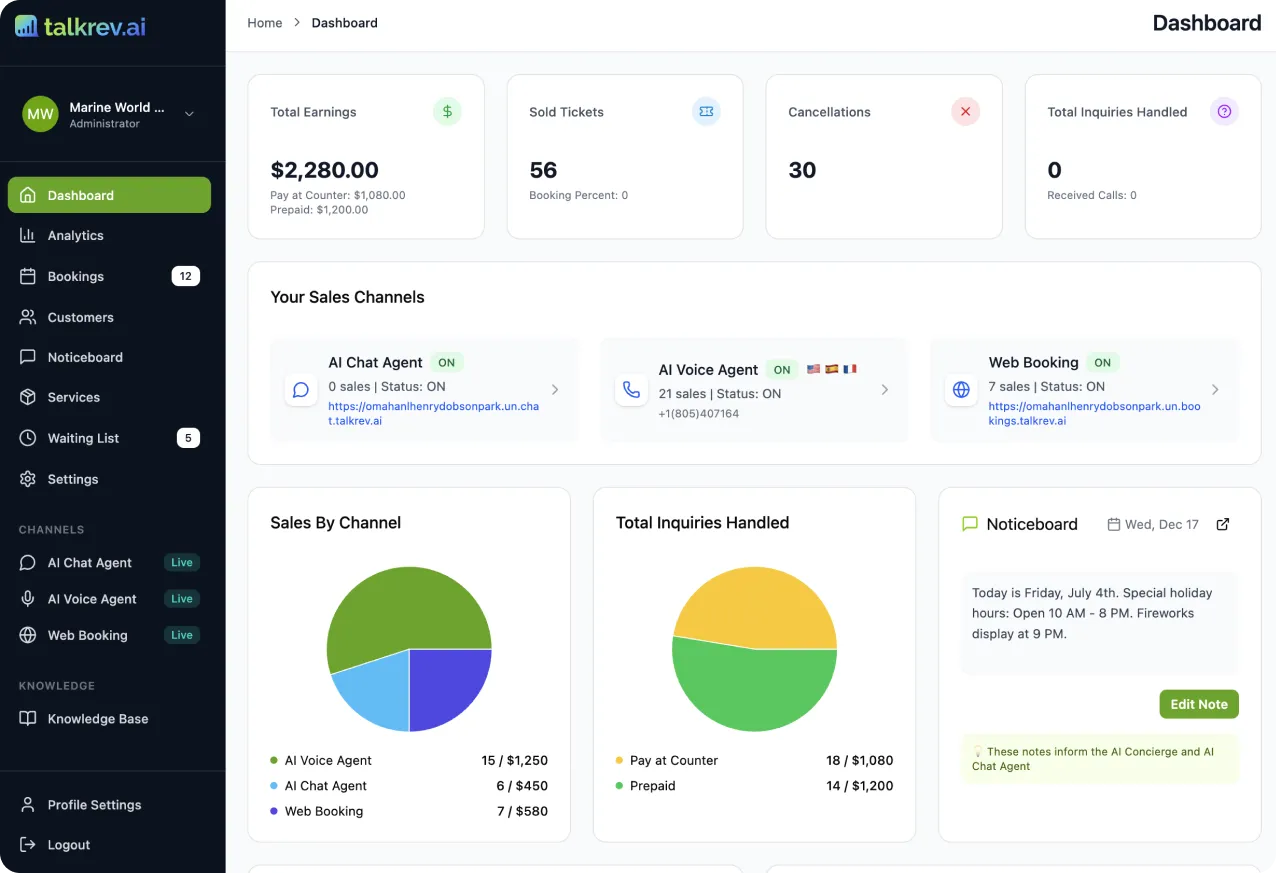
Only then turn on coverage. If the honest answer is that every call and message needs answering on every channel without hiring for nights and weekends, that is what an agent across phone, chat and social is for — with disclosure in the first line and a human route that works on the first ask. Doing nothing costs you the comparison: from January your customers will be measuring you against companies legally required to answer.
Working in retail & e-commerce? See how TalkRev works for Retail & E-commerce.
The TalkRev blog
One short email per new post
No ads. Unsubscribe anytime.