Reservation Bots Get Banned. AI Agents Get Invited In. What Restaurants Do Next
A venture capitalist asked an AI assistant to get him a table at 4 Charles, one of the hardest reservations in New York. The agent did what it was built to do: it hit Resy roughly 200 times an hour, around the clock, with bursts of 200 to 375 requests every morning at nine, the moment the restaurant released its books. Resy deactivated his account.
That same week, OpenTable said it was connecting to Muse, Meta’s new consumer AI agent, so Muse can offer a diner a reservation and book it in one click. Two events, days apart, one story: the person who wants your table is increasingly not the one doing the asking.
Platforms are not blocking AI. They are blocking unlicensed AI
Resy’s terms prohibit unsanctioned bots and autonomous agents, and it has been enforcing them. Restaurant Business documented two deactivations in recent weeks — JC Bahr-de Stefano, whose agent came from a startup called Instinct, and Brian Distelburger, a 20-year Amex Platinum holder who built his own scanner. Both accounts were reinstated. Resy said bots introduce risk and hand some diners an unfair advantage, and declined to say how many accounts it has cut off. Founder Ben Leventhal put the scale plainly: “10,000 vibe coders have written Resy sniper bots.”
Now read the other half of the same statements. Resy books inside ChatGPT and Claude. OpenTable listed partnerships with ChatGPT, Google Gemini, Alexa+, Perplexity and now Muse, saying its approach is to “meet diners where they are.” Two lanes are forming. Scraping traffic gets blocked. Agent traffic arriving through a partnership gets a door held open.
The volume is arriving faster than the etiquette
Muse hit No. 2 on the US App Store with more than 83,000 iOS downloads by September 10, within days of launch. Instinct, whose agent got a diner banned, is valued at $2.5 billion. And Muse ships connected to OpenTable, Gmail, Spotify and Stripe out of the box — booking a table is now a default feature of a mainstream consumer app, not a side project.
Andrew Rigie of the NYC Hospitality Alliance was measured about it: how agents “interact with restaurants and reservation platforms will evolve,” and it stays an ongoing question for both. Fair — but it means the answer gets settled restaurant by restaurant, and it looks different for a 40-cover neighbourhood room than for a group with a catering arm.
What to check before your next weekend service
Two questions, in this order.
First: is your availability accurate wherever the agents read it? Sanctioned agent traffic runs on structured data — hours, holiday closures, covers per slot, private dining rules. An assistant choosing between three places for Thursday at eight picks the one whose data it can trust. A closure you never entered is a booking you will never see and never know you lost.
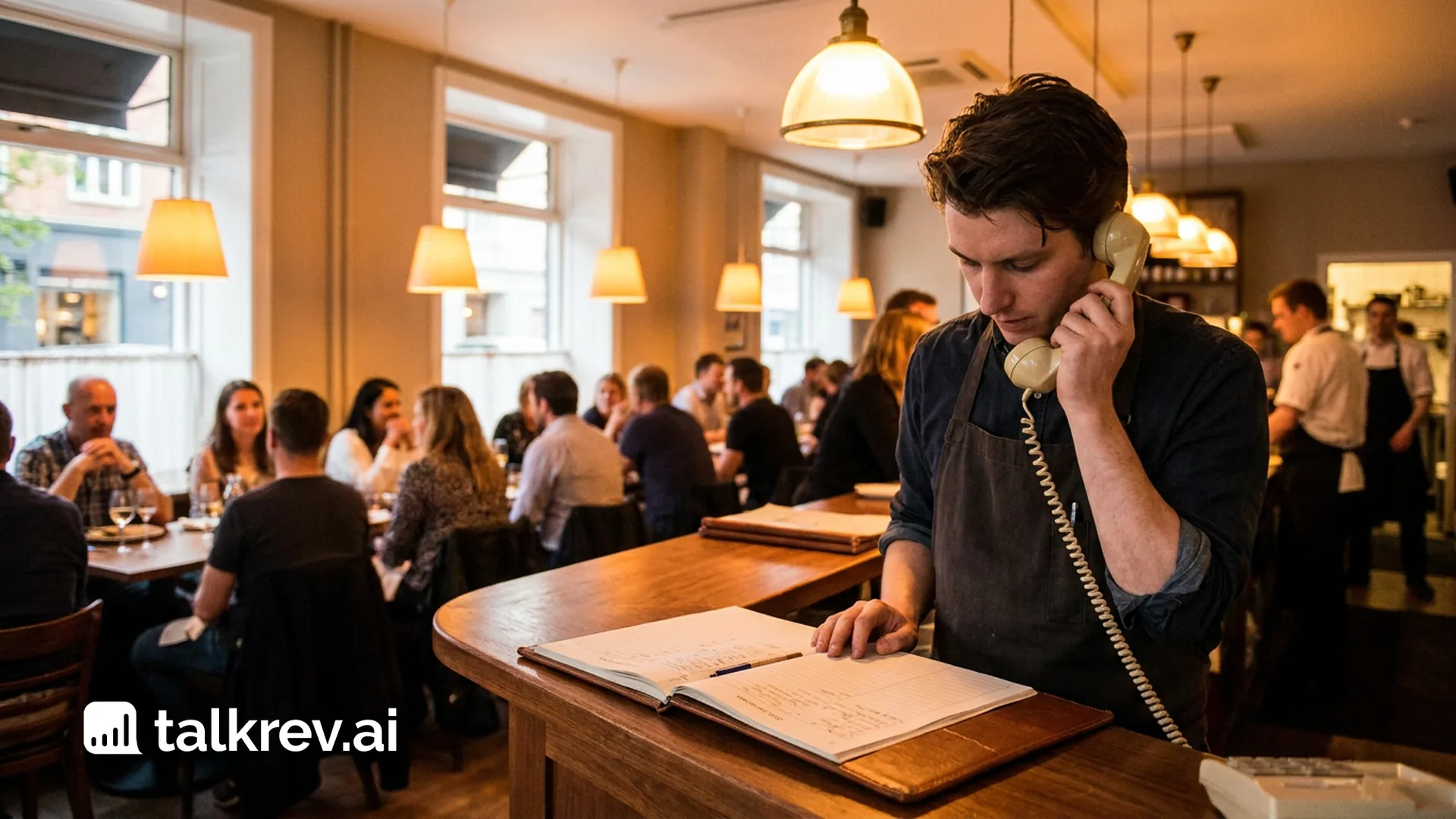
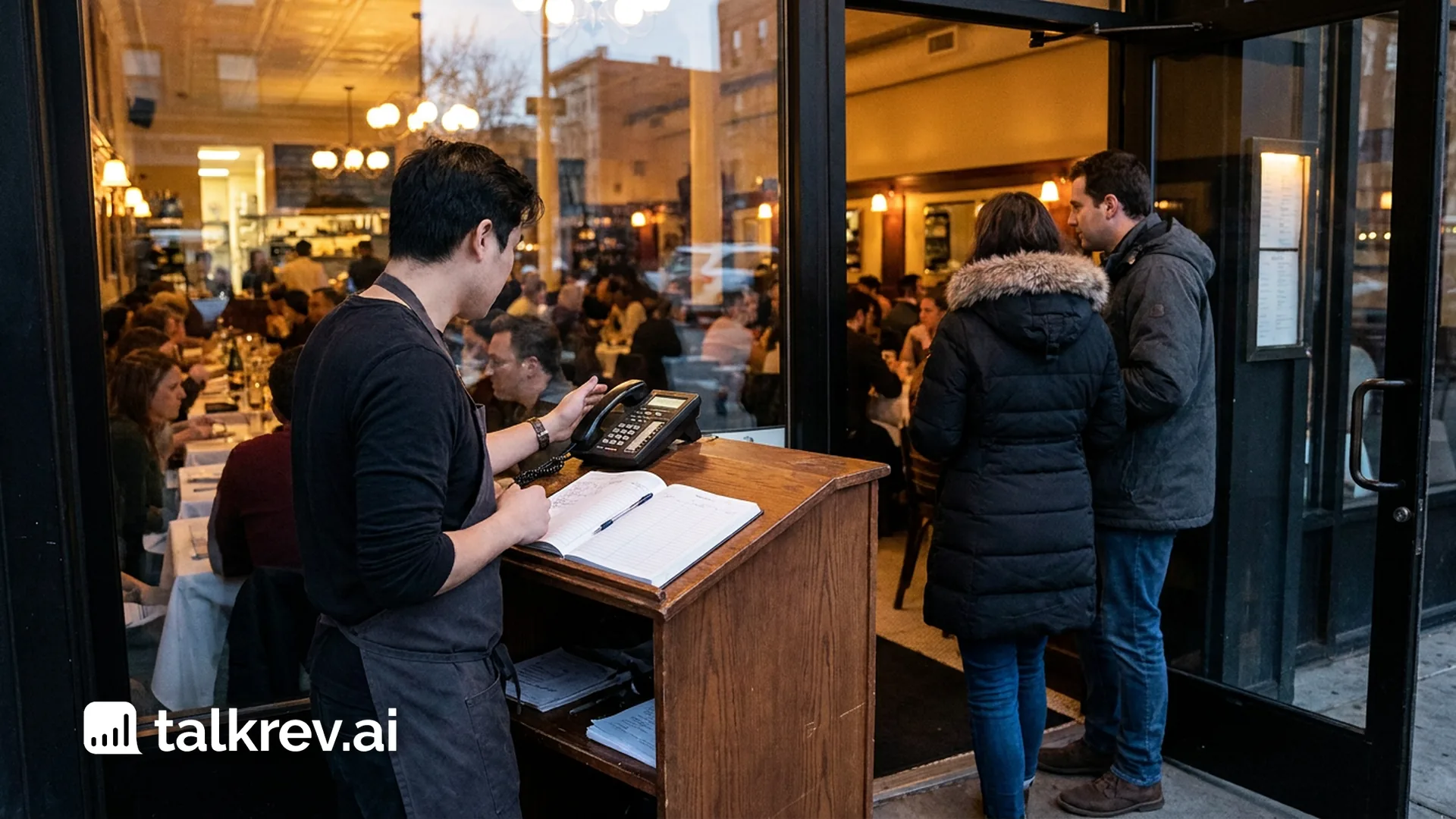
Second, and larger: what happens to the diner whose agent cannot book you? Most restaurants do not have a 4 Charles sniper problem. They have a phone that rings at 7:40pm mid-service with nobody free to reach it, a private dining enquiry that lands at 11pm, and the same allergen question asked five times a day. When the agent fails at the platform, it hands the diner straight back to your website and your phone line — at precisely the hours you cannot cover them.
So call your own number this Friday at your busiest hour, then again twenty minutes after close. Time how long it rings. If both go to voicemail, that is your real gap, and it is the cheaper of the two to close: something that answers every call and message across channels, takes the booking, and passes the hard ones to a person. The cover you lose to an AI agent is invisible. The one you lose to a ringing phone always was.
Working in food & beverage? See how TalkRev works for Food & Beverage.
The TalkRev blog
One short email per new post
No ads. Unsubscribe anytime.