Service Budgets Grew 2%. AI Spending Grew 38%. Where Attractions Should Aim Theirs
Gartner surveyed 199 customer service and support leaders in April and May and published the results on 28 August. Their overall function budgets grew 2% across the year. Their AI spending grew 38%.
The gap is the whole story, because the money is not new money. Kim Hedlin, a director analyst in Gartner’s customer service practice, said leaders are “redirecting spending away from labor and overhead and instead toward technology” — and then added the line that matters more than the percentage: “Hype alone doesn’t make a technology the right solution to real business problems.”
The channels are about to change places
Asked which channels deliver the most value today, those leaders named live chat and the phone. Asked where the value sits two years out, they put GenAI chatbots first, live chat second, and GenAI voicebots third. Two of the predicted top three are machines answering.
That is a forecast rather than a result, but forecasts from budget holders tend to be self-fulfilling — they are the people who sign off. And there is already behaviour underneath it. A separate Gartner survey found customers are three times more likely to use a third-party assistant like ChatGPT than a company’s own chatbot when they need something resolved, with third-party use nearly doubling in a year while company chatbot use has not shifted since 2022.
Visitors are not waiting for venues to build anything. They already have an assistant in their pocket. It just doesn’t know your wait times.
What that looks like at the gate
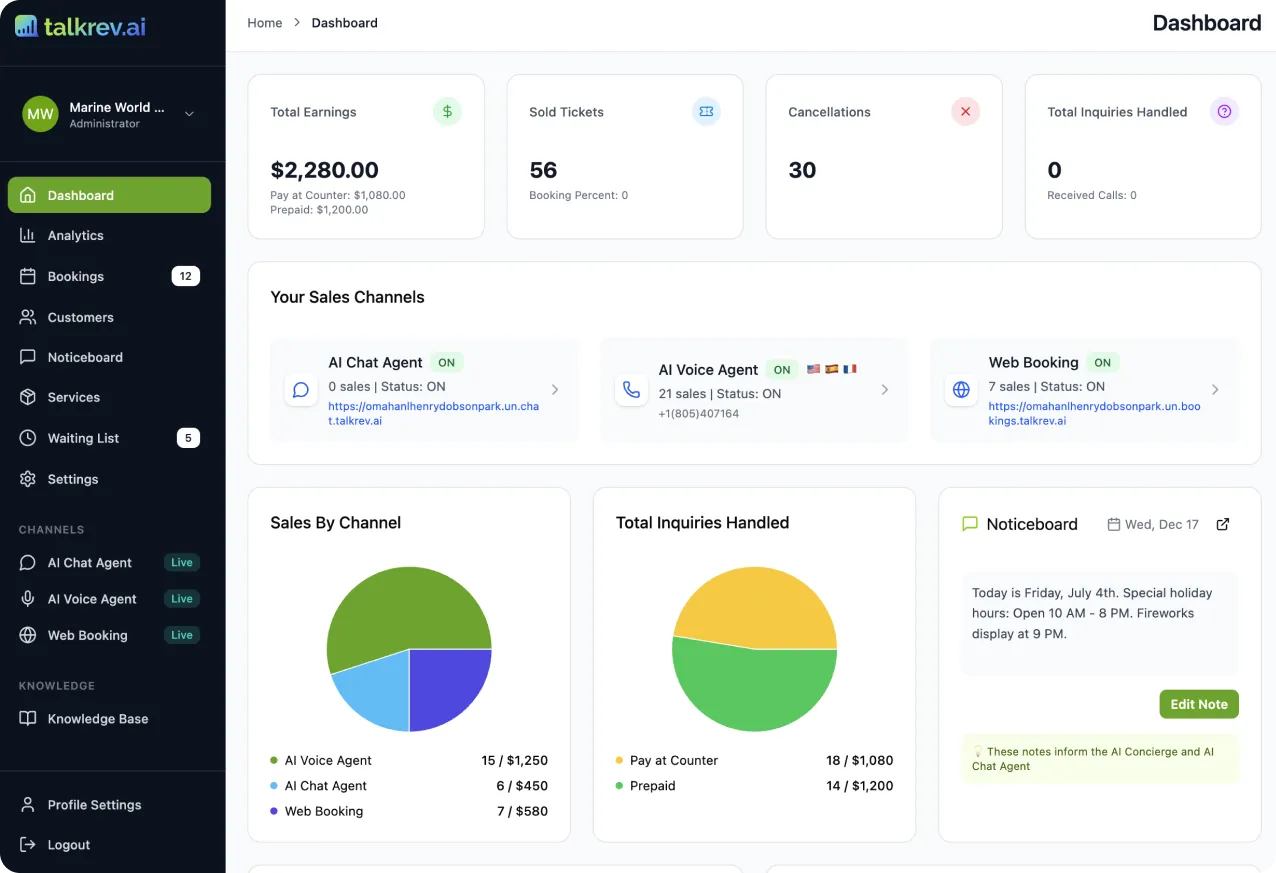
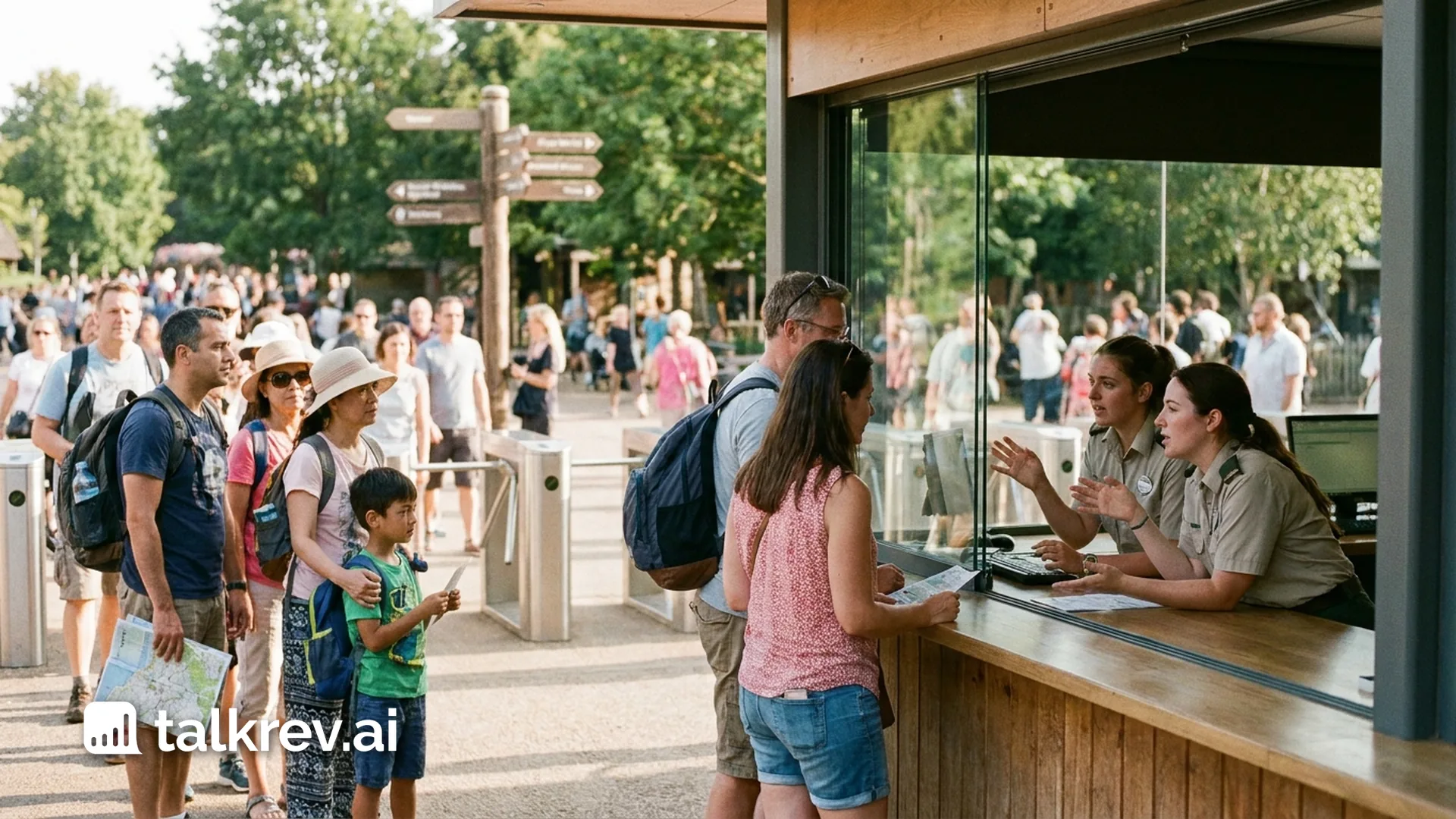
Guest services at an attraction is a service and support function, and it has a shape that flatters this kind of spending. The questions are repetitive, they are the same questions every day, and they all arrive at once — precisely when nobody is free to answer them. Maps, wait times, show schedules, which ticket covers what, is the ride running, where do I park, is there a quieter hour. A good share of the queue at the window is asking something a sign already answers.
Add the group and school bookings that take four exchanges to settle and arrive after five, and the international visitors asking in their own language. None of it needs judgement. All of it needs an answer in seconds, in the language it was asked, at nine on a Saturday night. That is the part of guest experience at a venue that scales badly with headcount: you cannot hire for the peak of a peak.
Where to start before the next busy weekend
Log one busy week. Every question asked at the guest services window, every call that rang out, every message left unanswered until morning. Rank the questions by frequency — most venues find five or six account for the bulk of them.
Then write those answers down once, properly: opening hours, ticket categories, height and accessibility rules, parking, wet-weather policy, group rates. This is unglamorous and it is the step that decides whether anything you buy afterwards works.
Then decide what must reach a person — complaints, lost children, accessibility arrangements, refunds — and put the rest where visitors already are: answering on the phone and in chat at the same time, in the language the question arrived in, before and during the visit rather than the next working day.
The large service organisations in that survey funded this by cutting labour they already employed. An attraction that never had anyone on the phone at nine on a Saturday is not cutting anything. It is adding coverage it never had — a considerably easier decision, and a cheaper one.
Working in attractions & entertainment? See how TalkRev works for Attractions & Entertainment.
The TalkRev blog
One short email per new post
No ads. Unsubscribe anytime.