The Intake AI That Remembers the Caller Wins the Retainer. 70% Walk When It Forgets

Twilio’s 2026 Customer Insights Series, released on 24 September and built on 7,652 consumers and 660 business leaders across 18 countries, contains a gap worth reading twice. In Asia-Pacific, 84% of businesses believe their AI agents recognise returning customers and their history. Seventy per cent of consumers say they routinely have to start a new conversation from scratch.
Twilio calls it “AI amnesia”: 70% of consumers have abandoned an AI interaction mid-way because the system had no idea who they were, and 5% ended the relationship with that brand entirely. The problem is not that the AI answered badly. It answered as if it had never met them.
The gap is context, not capability
Consumers are not rejecting the technology. Sixty-eight per cent say AI bots have improved over the past year, and 65% want AI agents from different companies to talk to each other directly. What they will not tolerate is being made to re-establish who they are. Twilio’s numbers show 65% having to repeat themselves or fill in gaps after being handed from an AI to a human — the exact moment the handoff is supposed to make things easier.
The cause is plumbing. Customer data sits across a CRM, a support tool, a booking system and an identity layer, each with its own access rules, and an agent wired to none of them is running blind. Twilio’s Robert Woolfrey put it plainly: “AI is only as helpful as the context you feed it.”
What amnesia costs at a law firm’s front door
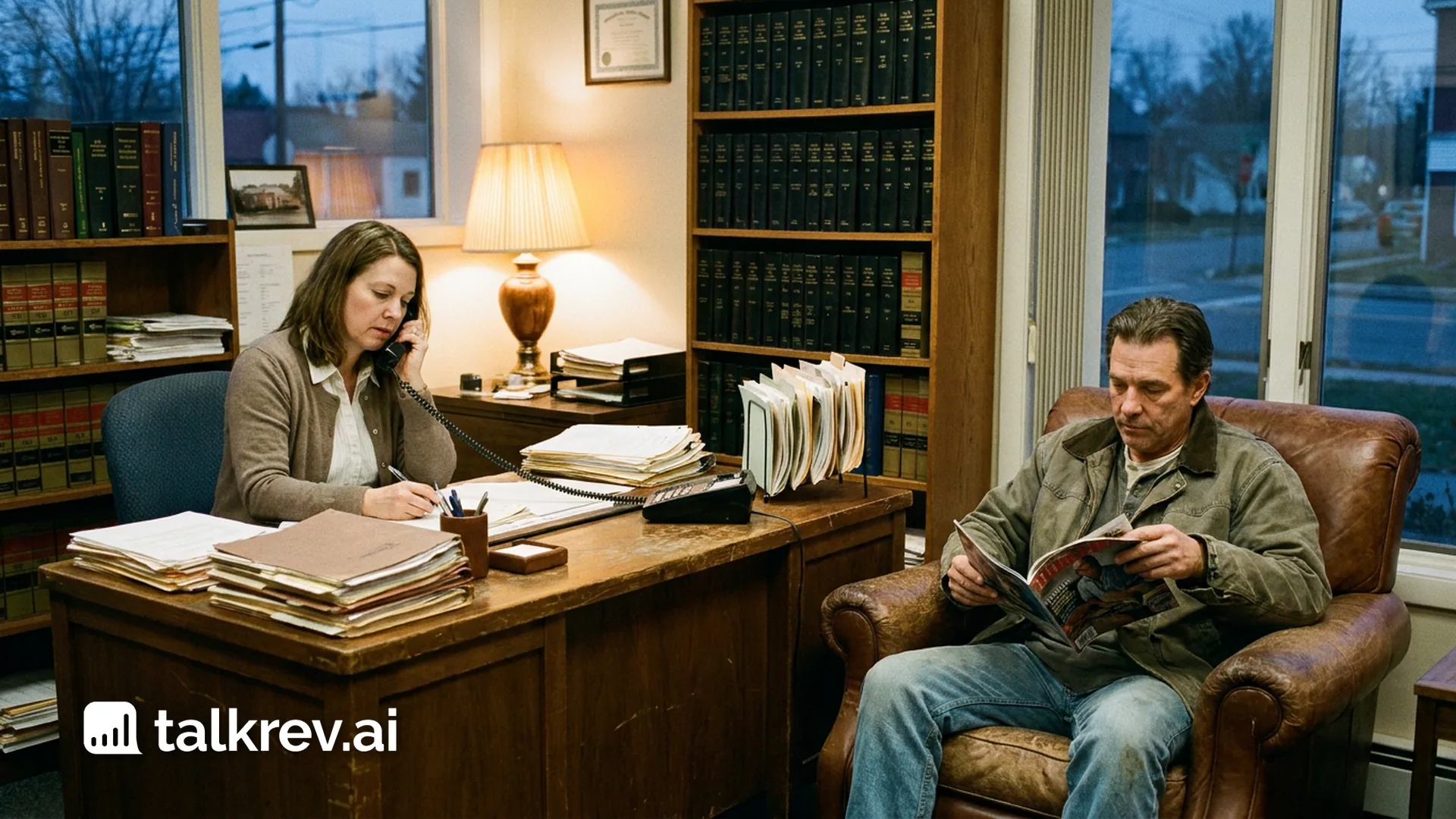
A prospective client calls at nine on a Sunday night about a rear-end collision. They explain what happened, how badly they are hurt, what the other driver said. They are told someone will call back. On Monday an intake coordinator rings and asks them to start at the beginning.
By Monday they have called three other firms. Prospective clients tend to retain the first firm that responds properly, and being asked to retell an accident or a custody dispute a second time reads as an institution that was not listening the first time. This is the whole reason intake for a law practice is a different problem from generic support: the caller arrives once, in distress, at an hour when nobody is at the desk, and the firm gets one chance to hold them.
Where to start before the next after-hours call
Call your own main line at 9pm on a Saturday and see what a prospective client gets. Then pull last month’s intake log and count two things: how many callers had to supply their name, contact details or case summary more than once, and how many consultations were booked inside the first conversation rather than after a callback.
If you put an agent on the line, make continuity the specification, not a feature you hope for. It should announce that it is an AI at the start — 70% of consumers expect that and only 22% of businesses do it, so it is nearly free trust. It should capture name, contact and case summary once, route by practice area, and hand a human the structured summary rather than a name and a number. An agent that carries the conversation across phone, chat and SMS is what keeps a Sunday-night caller from repeating themselves on Monday.
The cost of doing nothing is not a lost order. It is a signed retainer that went to the firm down the road that picked up.
Working in law firms & legal services? See how TalkRev works for Law Firms & Legal Services.
The TalkRev blog
One short email per new post
No ads. Unsubscribe anytime.