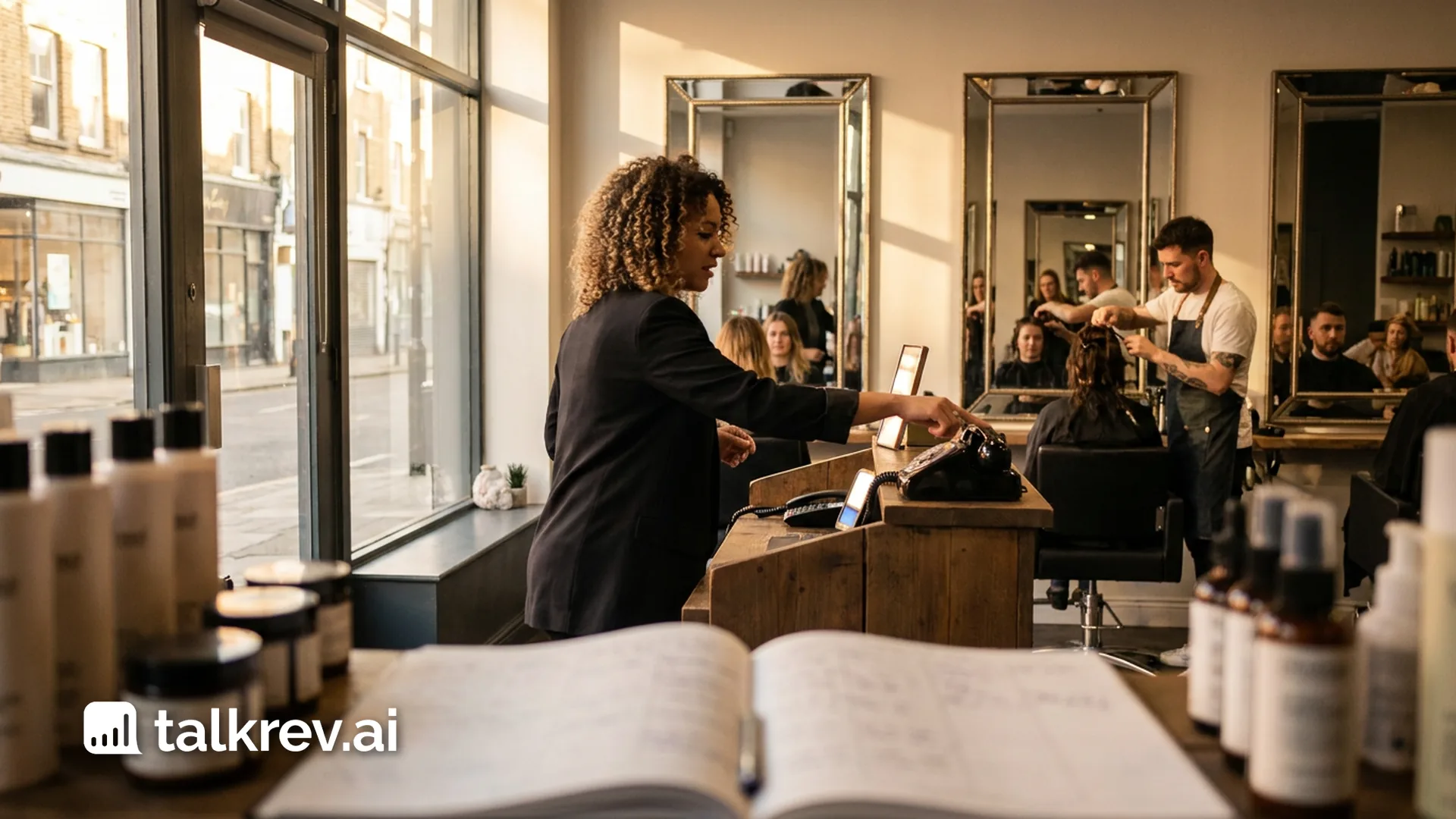
On September 16, two consumer AI assistants switched on the same feature within hours of each other. Instinct launched Concierge, which places phone calls for its users — founder Noah Shinn described it as handling things like booking a restaurant that takes no online reservations, getting onto a dentist’s cancellation list, or sorting out a cable bill. The same day, Meta expanded its Muse beta so the assistant can call US businesses on a user’s behalf, starting with the people who had asked for it.
For a salon, a clinic or a barbershop, that is not an AI story. It is a change in who is on the other end of the line at two o’clock on a Tuesday.
The call is now a comparison, not a conversation
Google has been doing this the longest. “Ask for Me” launched in Search Labs in January 2025 with exactly two categories: nail salons and auto repair shops. Someone searches “nail salon near me”, answers a few questions about what they want and when, and Google’s AI rings round the local options for price and availability. The answers come back to the customer as a text or an email, usually inside half an hour. At its developer conference in May, Google said the feature was expanding to home repair, beauty and pet care with a nationwide US rollout.
Read that carefully: beauty was in the very first cohort. Personal-care businesses have been fielding these calls for over a year, most without realising it.
The shift is what happens to your answer. It is no longer a conversation you can steer — it becomes one row in a table the client reads next to three competitors. A phone that rings out is a blank row. “I’d have to check with the owner and call you back” is also a blank row, because the agent has already moved on to the next number. As Liam Lytton of consultancy The 66th put it in a piece on AI callers, the first contact used to be a human who could be won over; now it might be software running down a checklist.
What the agent actually asks for
Narrow, factual things: what a treatment costs, how long it takes, the first slot you have, whether a specific stylist or practitioner does it. These are the same questions your front desk answers dozens of times a day — and the same ones that go unanswered when the desk is with a client, which in most salons and clinics is the majority of the working day. The phone is still where most bookings are attempted and where most are lost.
Where to start this week
Three things, in order.
Call your own number on Saturday at your busiest hour and again twenty minutes after close. Time how long it rings. That number is now your visibility in an AI comparison, not just a customer-service metric.
Then write down the five questions you are asked most and the exact answers — a real price range per service, typical duration, earliest availability, which staff member does what. Vagueness costs you the row.
Third, decide your policy deliberately. Google lets businesses block automated calls through Business Profile settings, so being called by AI is a choice, not something that just happens to you. For most salons and clinics, opting out is the wrong call: it removes you from the shortlist without removing the demand. The better answer is coverage — something that picks up every call and message, quotes from your own service list and books against real availability, passing anything clinical to a person. The client you lose to a ringing phone never tells you they called.
Working in wellness & personal care? See how TalkRev works for Wellness & Personal Care.
The TalkRev blog
One short email per new post
No ads. Unsubscribe anytime.