Search “Golden Corral menu prices” and the first source Google’s AI Overview cites is a site called golden-corral.us. It has prices, a nutrition calculator, and an “AI buffet plate builder.” It has no connection to the buffet chain. The fine print at the bottom says so outright: “Golden-corral.us is an independent resource and is not affiliated with Golden Corral.”
That detail comes from a July 29 report by Restaurant Business, which counted dozens, if not hundreds, of bogus restaurant websites sitting a few results below the real thing — for McDonald’s, Chipotle, Olive Garden, Cracker Barrel, Denny’s, Applebee’s. Search almost any large chain and you’ll find one.
If you run a single restaurant, a boutique hotel, or a two-attorney firm, the easy reaction is that this is a big-brand problem. It isn’t. The economics that produced those sites just got cheap enough to reach down to you, and the way customers now find answers means a shadow site doesn’t have to outrank you to be believed. It only has to get cited.
The shadow sites exist because ads pay for them
Most of these pages aren’t malicious. They’re advertising inventory wearing your name.
“It’s possible to make hundreds of dollars a month on revenue from people clicking on ads on a web page,” Robert Wahl, a computer science professor at Concordia University in Wisconsin, told Restaurant Business. “In a lot of cases, it’s a few small organizations that figure out that this works, that this can generate some revenue, and then they just replicate that process for different restaurants.” Wahl’s point about AI is the operative one: building a professional-looking site is now trivial, so the replication step costs almost nothing.
The industry already has a name for this category — made-for-advertising sites — and a rough measure of the scale. The Association of National Advertisers’ programmatic transparency study found MFA sites took 21 percent of study impressions and 15 percent of ad spend, out of $123 million in spending and 35.5 billion impressions analyzed between September 2022 and January 2023. The ANA put total waste in the $88 billion open-web programmatic market at as much as $20 billion.
Those numbers predate the current wave of generative tools. The demand side hasn’t changed much. The supply side — how many fake pages one person can produce in an afternoon — has changed completely.
For a small operator, the damage is more direct
A chain loses accuracy. An independent loses cash.
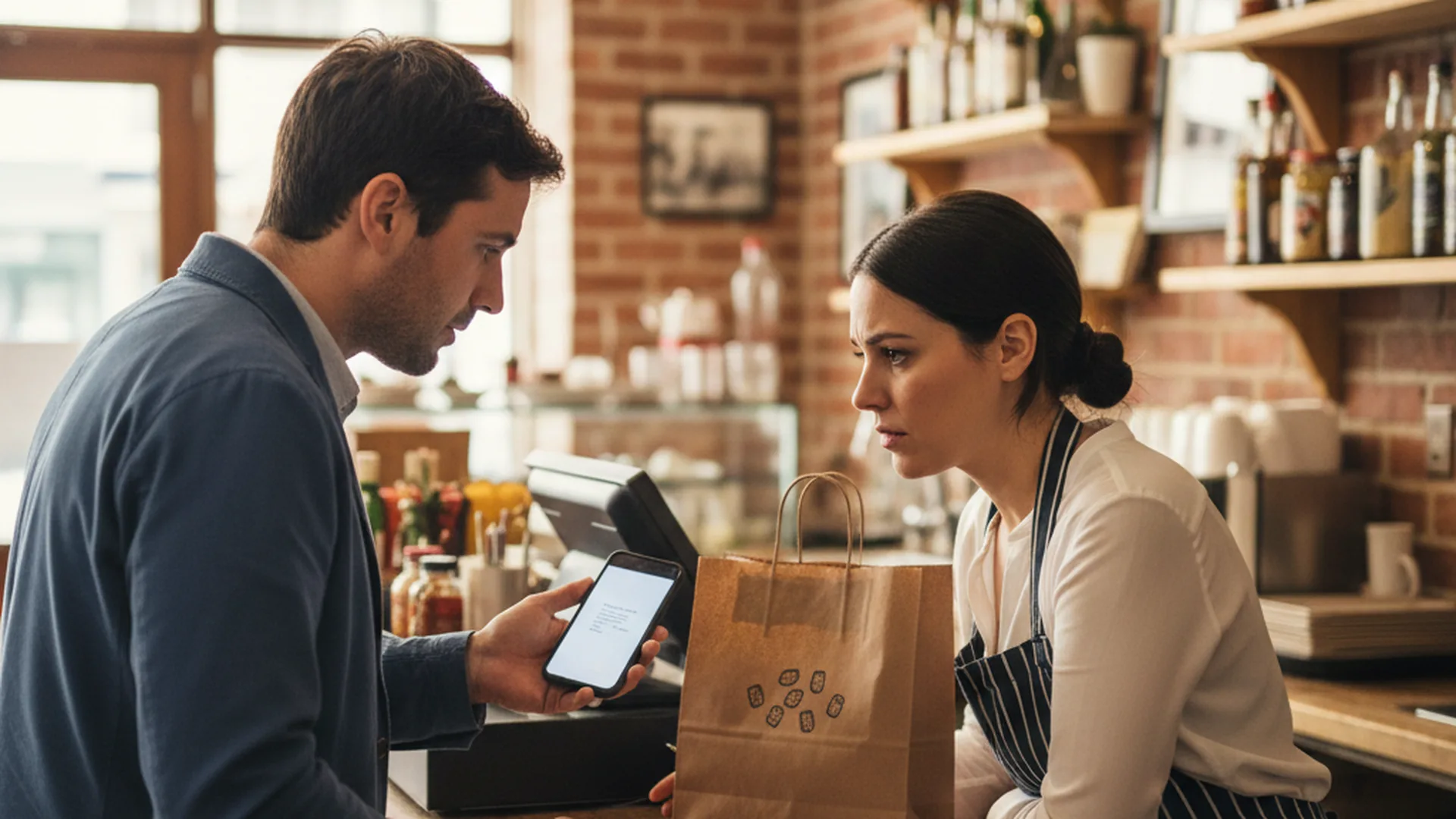
The Better Business Bureau has been tracking a nastier version for years: fake takeout ordering sites that look like a real restaurant’s own ordering page or a delivery app. The customer picks food, enters a card, gets charged. The restaurant never receives an order. The BBB has flagged operations under names like “Order Hero” and “Order Ventures,” which rebrand routinely. One consumer’s account: “When I went to the restaurant to pick up my food, they said they never received the order in the first place.”
Read that from behind the counter. The person who was defrauded is standing in your dining room, and every part of the experience that they’ll remember and review is yours. The same shape shows up as fake booking pages for small hotels, phantom tee-time pages for golf courses, and lead-capture pages that resell inquiries meant for a law firm.
AI answers pick a source instead of showing ten
The reason this got sharper in 2026 is a change in how the answer is delivered.
Ten blue links let a customer compare and notice the odd URL. An AI Overview or a chatbot reply picks a small set of sources and restates them in one confident voice, with the URL demoted to a citation chip most people never click. If the shadow site publishes clean, structured, machine-readable prices and your real site publishes a PDF menu, a photo of a sandwich board, and a link to your Facebook page, the machine will use the one it can actually read.
Denny’s VP of Brand Strategy and Communications, Meredith Thornton, described the new baseline to Restaurant Business plainly: “We’re entering an environment where every brand effectively has unofficial digital shadows, websites, aggregators, AI-generated summaries, and third-party platforms that can replicate information at a scale we haven’t seen before.” Her conclusion is the part worth stealing: “Brands will need to invest as much in helping consumers identify authoritative information as they do in publishing it.”
What to do about it this month
Start by searching your own business the way a stranger would, including the AI answer, and write down every URL that comes back. Most operators have never done this and are surprised by what’s out there.
Then make your own facts easier to read than anyone else’s. Hours, address, phone, prices, and menu or service list should be real text on your own pages, not baked into images or PDFs, and identical everywhere they appear — your site, your Google Business Profile, your listings. Publish exactly one canonical ordering or booking URL and say on the page that it is the only one. Where a third party genuinely takes your orders, name it. Ambiguity is what the shadow sites monetize.
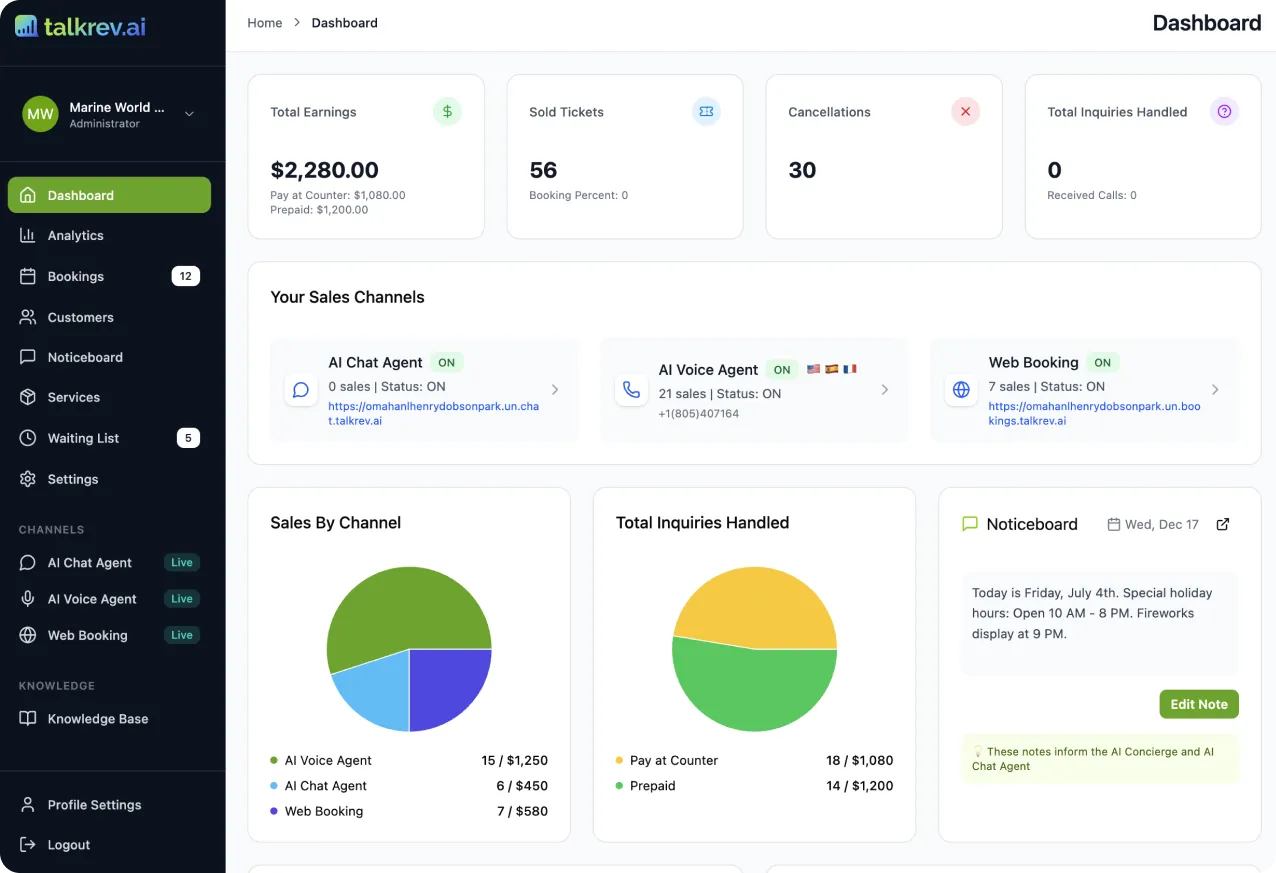
Last, close the loop at the point where a confused customer actually shows up: your phone and your chat window. That is the one channel nobody can clone, and it’s where “is this price right?” and “did my order go through?” get answered by you rather than by a scraped page — the practical reason restaurants and bars increasingly staff those channels around the clock rather than letting them ring out.
You can’t get the fake pages taken down at any speed that matters. Wahl’s assessment was blunt: “I wouldn’t expect this to go away.” What you can do is make sure that when a machine or a person goes looking for the authoritative version of your business, yours is the easiest one to find and the easiest one to confirm.
The TalkRev blog
One short email per new post
No ads. Unsubscribe anytime.